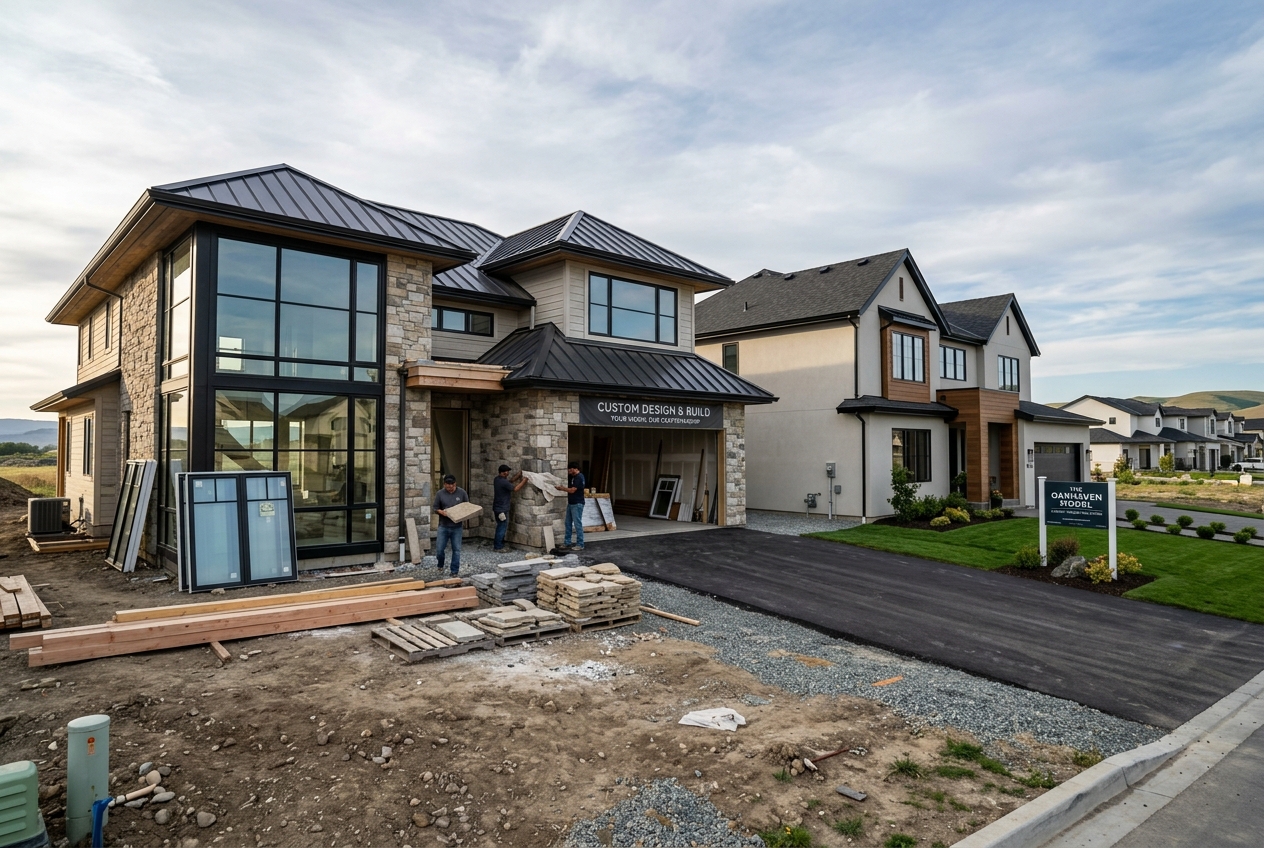
Most buyers assume “custom” and “luxury” mean the same thing. They don’t — and that distinction can cost you years of regret or hundreds of thousands of dollars.
Customization and Design Freedom
A custom home gives you a truly personalized building experience where you influence every detail. From architectural style to interior features, you dictate the specifics based on your preferences and lifestyle. If you have particular requirements — a music room engineered for acoustics or a home gym built to professional standards — a custom home can accommodate them without compromise.
High-end production homes are pre-designed, but with some flexibility built in. Builders typically offer a range of floor plans and a curated selection of finishes to choose from. Structural changes, though, are limited, and the architectural style is set from the start. These designs tend to follow market trends rather than your personal vision.
Investment and Resale Potential
Building custom means the decisions you make today shape your home’s long-term value. Choosing durable materials and forward-thinking technologies keeps the home relevant and appealing well into the future. Research from the National Association of Realtors suggests that energy-efficient features and eco-friendly technologies make homes more attractive to buyers — and support stronger resale values.
High-end production homes are built with quality materials, but they can blend into the neighborhood when neighboring properties share the same design and fixtures. Unless the location itself is exceptional, appreciation tends to be driven more by where the home sits than what makes it distinct.
Construction Timeline and Costs
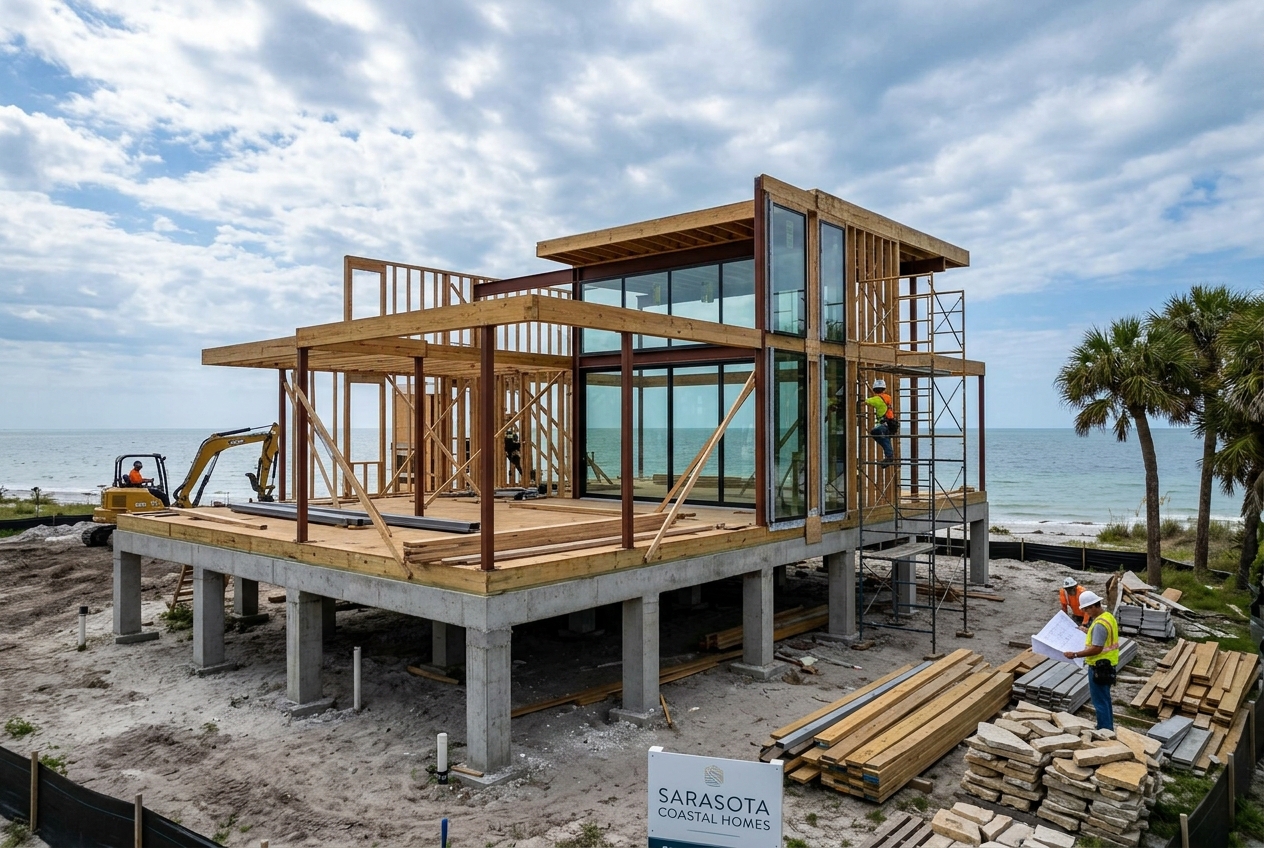
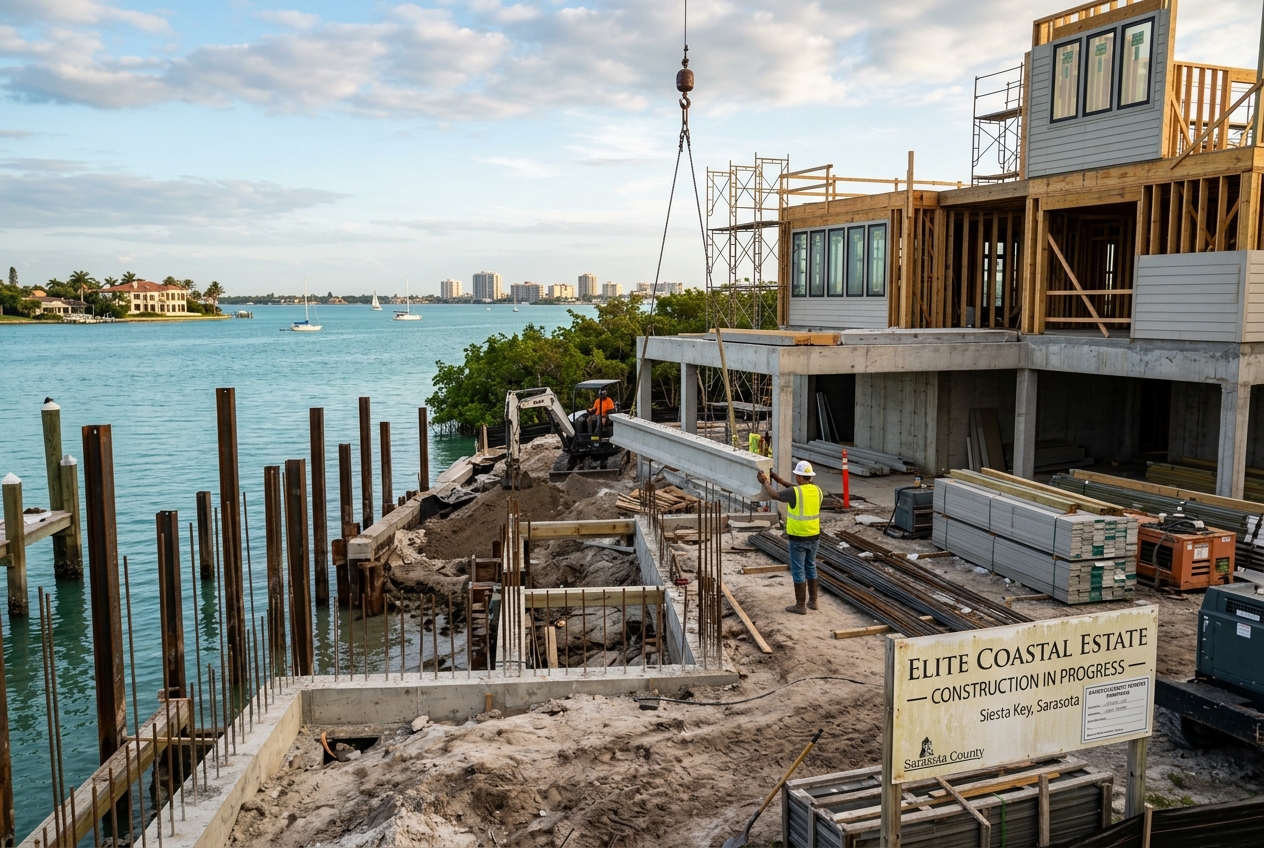
Custom homes take longer — every design choice has to be reviewed, adjusted, and executed to your specifications. That process typically runs 12 to 16 months, sometimes longer when specialty permits or bespoke materials are involved. For context, the U.S. Census Bureau puts the average build time for new single-family homes at around 9 months, which gives you a sense of how much additional time true customization requires.
Production builders, by contrast, have refined their processes to move quickly. Established schedules and streamlined workflows typically bring build times down to 6 to 9 months — a real advantage if your priority is a faster move-in, though that speed comes with less room for individualization.
Quality of Materials and Craftsmanship
With a custom home, you choose materials from foundation to rooftop without being steered toward a package. Want Florentine marble or reclaimed wood from a centuries-old abbey? You can have it. Bespoke craftsmanship tends to show throughout — builders and tradespeople are focused on meeting your specific vision, not hitting a standard.
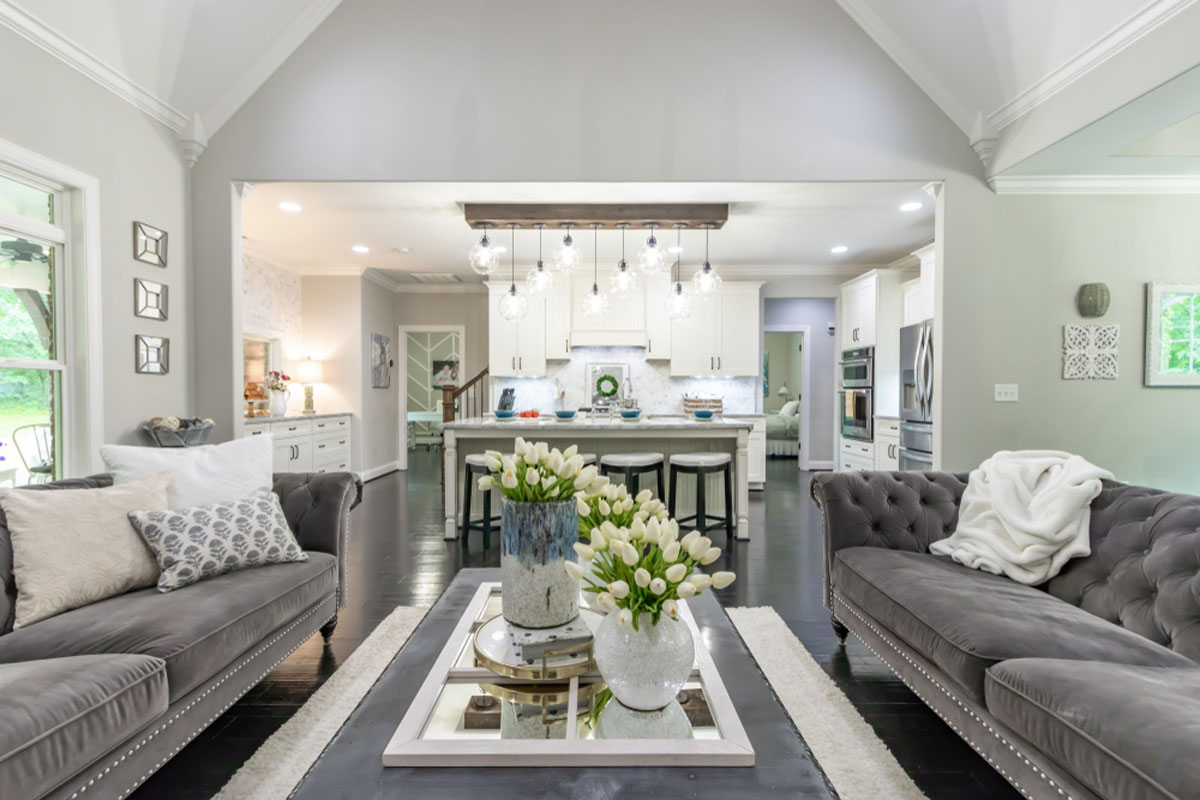
High-end production homes aim to balance quality with cost efficiency. Builders negotiate bulk rates with suppliers and work within premium-but-standardized fixture packages, which allows them to deliver a luxury finish without the expense of sourcing one-of-a-kind materials. The result looks and feels upscale — it’s just built from a shared menu.
Sustainability and Technology
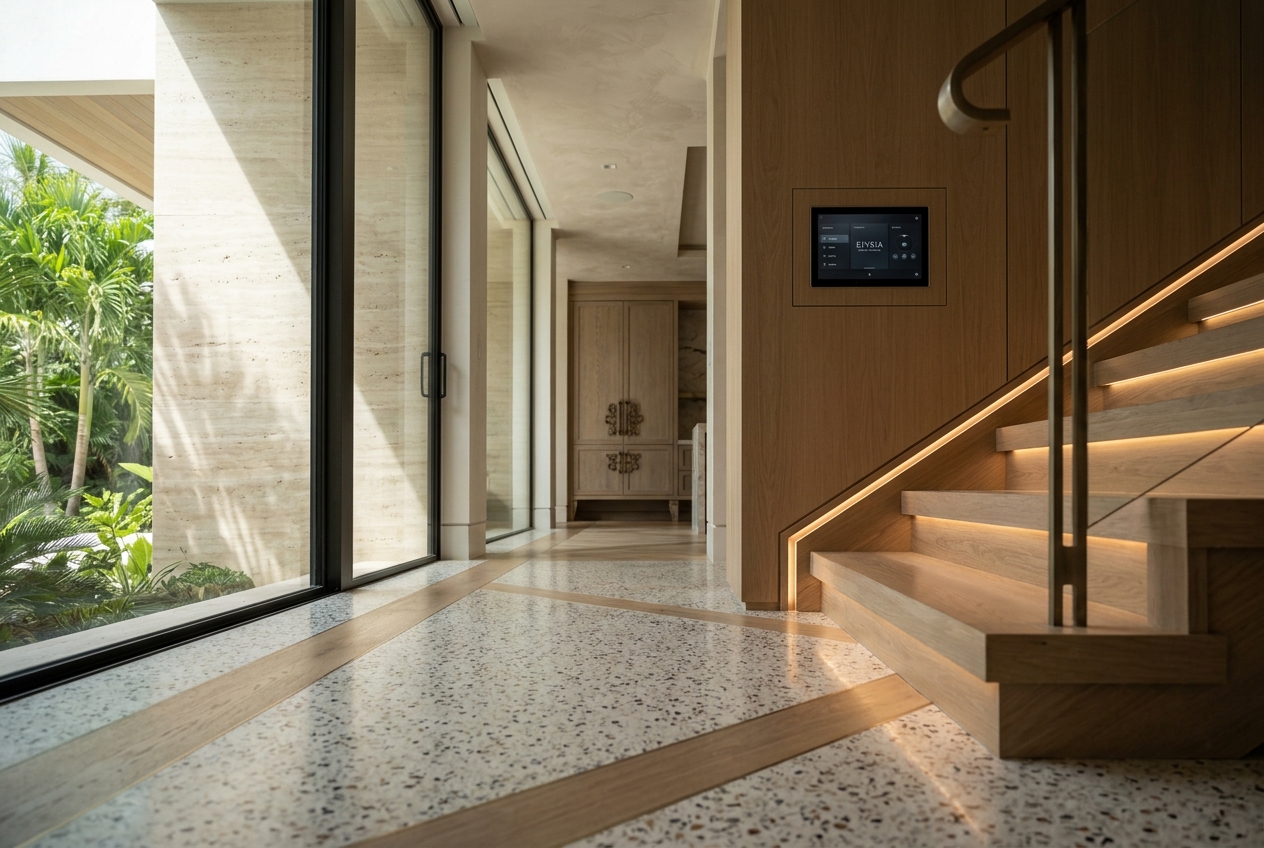
Many buyers today are prioritizing green building practices, and custom homes offer the most flexibility here. Solar panels, greywater recycling systems, and smart home technology can all be woven into the design from day one rather than retrofitted later.
High-end production homes have moved in this direction too, often including energy-efficient appliances and eco-friendly materials as standard. The difference is that the specific technologies are largely pre-selected by the builder and may not reflect the latest developments — or your preferences.
Which One Is Right for You?
The choice comes down to what you value most. If you want a home that reflects your exact vision — down to the materials, the layout, the technology — a custom build delivers that in a way production homes simply can’t. If you want luxury finishes and a faster path to move-in, a high-end production home is a genuinely strong option.
Neither is the wrong answer. But understanding what you’re actually choosing between means you can make a decision that fits your life now and holds its value for the long run — not just a place to live, but a home that’s unmistakably yours. Ready to explore what a custom home could look like for you? Get in touch with Elysian Homes to start the conversation.